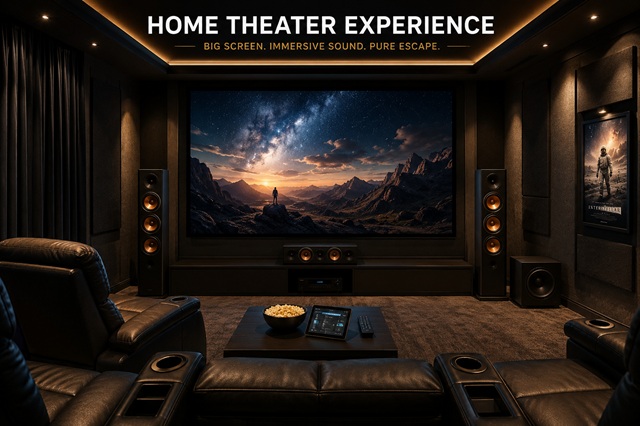
In an era dominated by streaming giants, the convenience of digital media is undeniable. However, for true audiophiles and cinephiles, the reliance on streaming often means compromising on audiovisual fidelity. The heavy compression algorithms used to deliver 4K content over the internet can result in visible artifacts, banding, and a loss of the dynamic range that modern televisions are designed to showcase.
This is why physical media—specifically 4K UHD Blu-ray discs—and uncompressed digital backups remain the gold standard for home theater enthusiasts. But achieving the perfect viewing experience requires more than just a high-end display; it requires a sophisticated software ecosystem capable of decoding complex formats, rendering High Dynamic Range (HDR) accurately, and bypassing modern encryption standards.
The Calculation Behind the Perfect Setup
Building a home theater involves careful calculation. From measuring the optimal viewing distance (typically 1.5 to 2.5 times the diagonal screen size for 4K displays) to calibrating audio delays and speaker placement, precision is key. Yet, one of the most frequently overlooked “calculations” is software compatibility. Even the most expensive hardware will falter if the software player cannot properly handle HDR metadata or falls victim to hardware acceleration bugs, resulting in washed-out colors or missing menu text.
The Challenge of Modern Blu-ray Playback
Playing standard digital files is simple, but navigating the intricacies of a commercial Blu-ray is a different story. Discs are protected by layers of Advanced Access Content System (AACS) encryption and Media Key Blocks (MKB). As these protections continuously update (frequently reaching MKBv72 and beyond), many standard media players are left unable to read the discs. Furthermore, rendering HDR content natively on standard dynamic range (SDR) monitors without losing color accuracy requires advanced tonemapping algorithms.
The Solution: iToolShare Blu-ray Player
To bridge the gap between premium hardware and seamless playback, software engineers have developed specialized tools. The standout solution for this year is the iToolShare Blu-ray Player. Designed for both casual viewers and technical power users, it provides a comprehensive multimedia engine that excels where standard media players fall short.
Technical Highlight: Unlike generic media players, this software integrates seamless key synchronization, ensuring immediate compatibility with the latest high-MKB Blu-ray releases without manual configuration.
This player offers several critical features that make it an indispensable tool for media management:
- Seamless 4K UHD and HDR Rendering: The software uses advanced algorithms to process HDR metadata accurately. Whether you are viewing on an HDR-capable monitor or relying on its robust SDR tonemapping, the visual output maintains cinematic fidelity.
- Comprehensive Menu Support: It completely reconstructs Blu-ray and DVD navigation menus, offering the authentic disc-viewing experience. It also provides granular control over hardware acceleration to prevent common display bugs.
- Cross-Platform and Virtualization Support: Beyond standard environments, it is optimized for architectural versatility, including smooth performance on ARM64 architectures—perfect for users running Windows via virtualization on modern Mac silicon.
- Lossless Audio Passthrough: A home theater is only as good as its sound. The player supports direct passthrough of high-resolution audio formats directly to your AV receiver.
Conclusion
As display technology continues to push the boundaries of resolution, brightness, and color depth, relying solely on highly compressed web streams is doing your hardware a disservice. Investing in a robust, dedicated media tool ensures that you are extracting every pixel of performance from your setup. Whether you are playing physical discs or managing a massive library of uncompressed ISO backups, having the right software is the final, crucial variable in the home theater equation.